I started to write this post about a refinishing project I worked on involving a “banister”. I was starting to doubt my spelling of the word, so I did some research. Turns out there’s a whole bunch of web pages devoted to which spelling is used in different countries. Wow… just wow. Apparently either spelling is appropriate, but “banister” with one “n” is typically used more in the U.S. I’m going to go with that for now.
There are so many people that have projects they’d like to do but then don’t have the time to do them or the thought of starting it is overwhelming. As a result, wallpaper from the 1960s remains in kitchens all over the world, and outdated tilework, lead paint, and other things like this sit untouched. This is understandable. Many people do not have the proper tools at their homes to do some of what is required to repair or update something. Additionally, it can start as something small and turn into something more unmanageable very quickly. Ripping into something can sometimes result in opening a can of worms, or quite literally a wall of termites. This was not necessarily the case with the banister project I’ll be telling you about, but it did feel like we would never get done sanding.
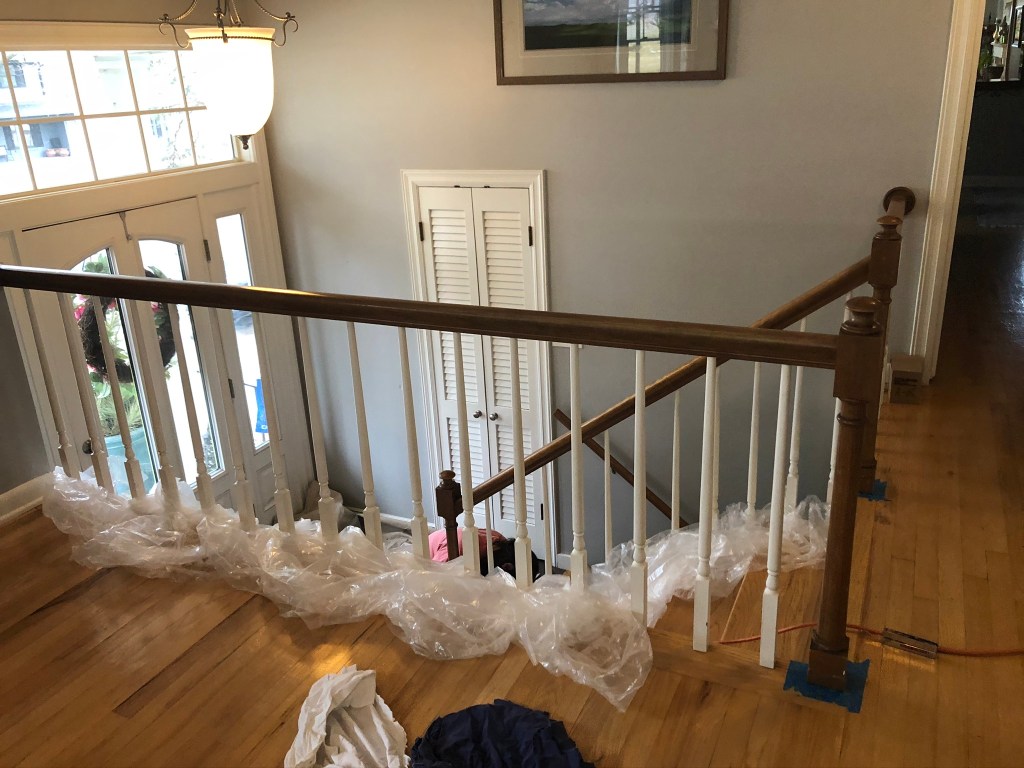
A friend of mine contacted me because she wanted her banister to be a bit darker to match some walnut furniture she had around her home. Her stairs and wood floor are a lighter stain and her spindles are painted white. The banister was stained another color that had an orange-brown tint to it that gave off a bit of a 70’s vibe.
I took my electric palm sander and some loose sheets of sandpaper to her house, along with painter’s tape, rags, etc. The banister had been stained but also had some type of varnish on it. It was not clear to me whether the varnish is what was giving it the orange hue or if the stain itself was that color from the start. The stairway is also in an area that gets enough light that it’s possible it had faded over time. You can see what it looked like before we began refinishing it in the photo below.
I was afraid to use varnish stripper because of where the banister was located. She also has a beautiful Goldendoodle named Teddy who roams the house. I was concerned for his safety with the fumes and chemicals. Other things I considered were related to the flooring and spindles. We didn’t really want to have to repaint the spindles if stripper dripped onto them. We also did not want to have stripper hit her flooring and take any varnish off. The safest route was to sand.
When I started sanding I could see that the layer of varnish was fairly thin, but there was an oily layer of sorts present as well. That oily type residue was something I hadn’t encountered before so I was not sure if it was due to the type of wood it was or the age of the varnish. I also later wondered if it was due to everyone touching the banister all those years. The oily residue clogged the sandpaper quickly. Looking back now I think I could have used a more aggressive sandpaper for the first round of sanding, but I just was too worried about hurting the wood. I never could figure out exactly what type of wood the banister rails were. I believe the posts, which you’ll see in photos later may have been oak or perhaps very nice pine.
We sanded the larger areas we could access with my palm sander and then had to use small pieces of sandpaper to sand in all of the curved areas and crevices. The sanding took a LONG time! It was messy and created fine dust throughout the house as expected. I think we were both sore afterwards from standing and climbing all over the stairs to get to hard to reach areas. Meanwhile, Teddy sat with a watchful eye, supervising us.

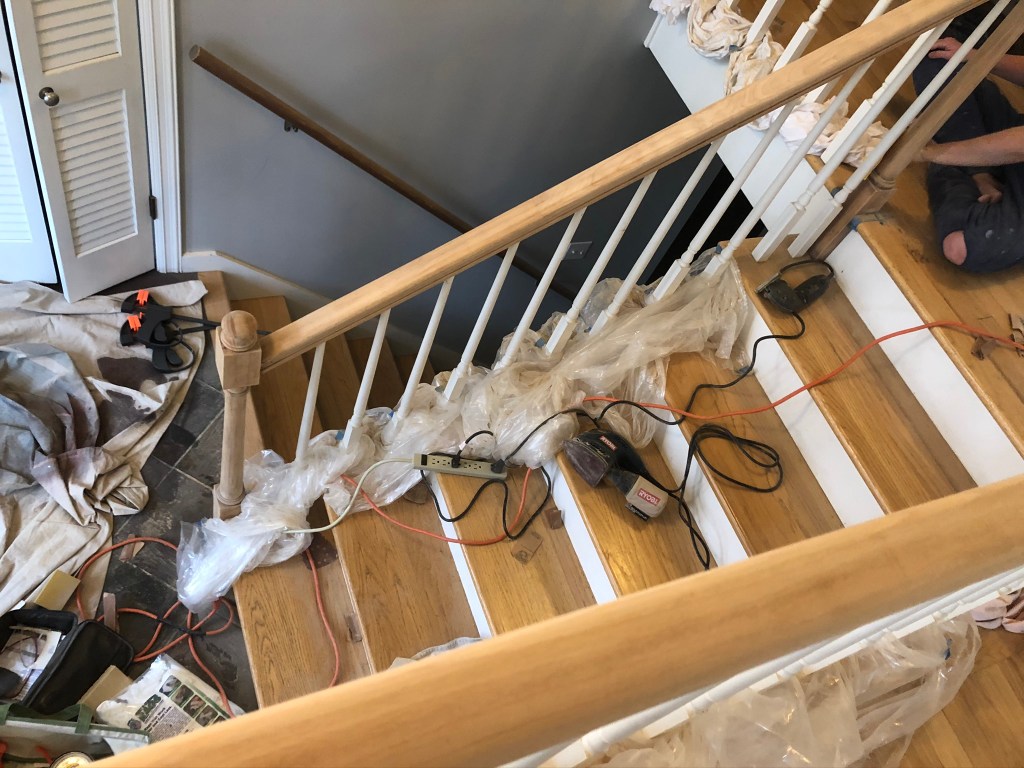
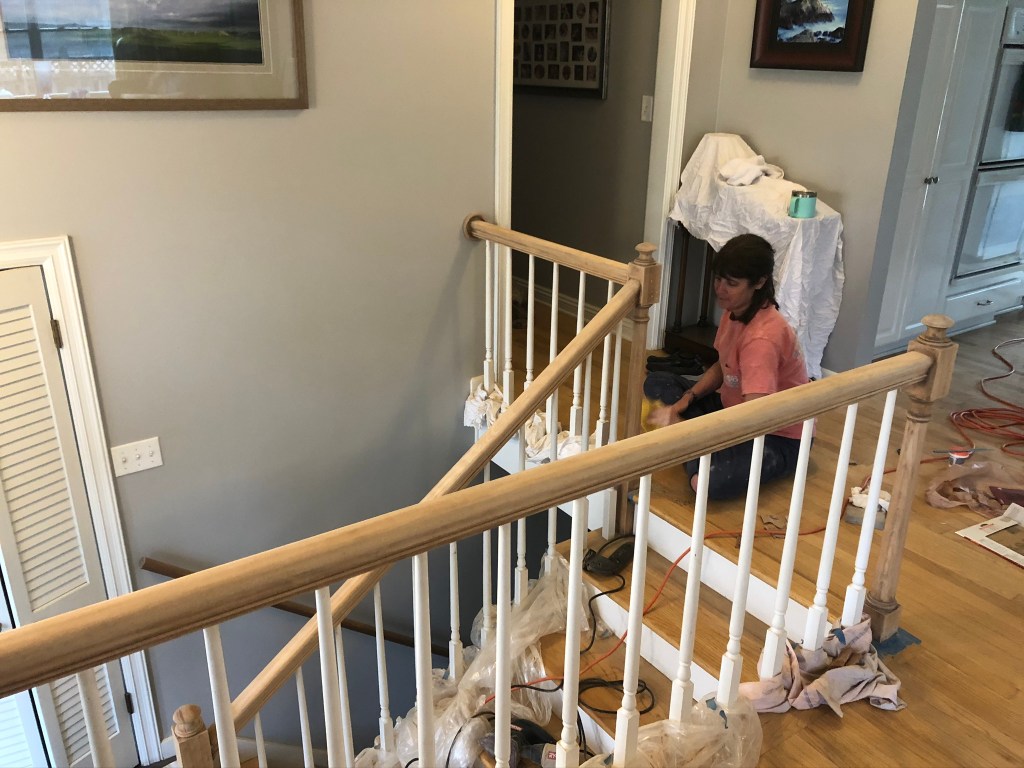
Once we got everything sanded, we wiped the wood down to remove any extra debris or dust to prep it for new stain. The stain was literally called “walnut”. When I started applying it, the comparison between what the wood looked like before and what the stain was bringing out was quite different. The darker stain pulled out more of the grain. Even just sanding and removing the layers of original stain revealed more of the woodgrain but the walnut stain enhanced it.
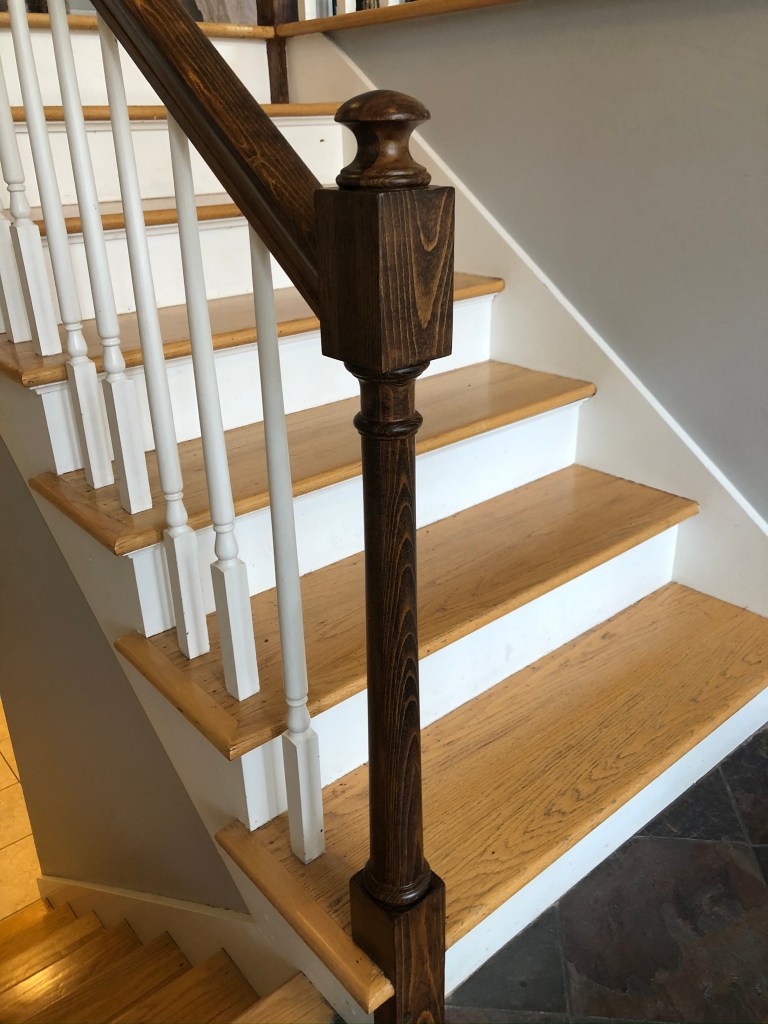
Once the stain dried I came back to her house and we put a coat of satin varnish on it. The finished banister can be seen in the photos below.

I am not sure how long this project took and it doesn’t matter. The time spent laughing and chatting with my friend who I have literally known since grade school was priceless and well worth all the sweat the two of us produced in sanding the heck out of this!
I also got to spend more time with Teddy. He is a Goldendoodle who has the same parents as our Rosie. (Rosie on the left and Teddy on the right.)


 Bark to Finish
One response to ““Banister” or “Bannister”?”
Another beautiful and well done piece of work Michele!! Love the two dogs/appraisers also!!:)
LikeLike